There is something powerful about travel, Honestly It brings people together. It creates memories. It supports families, communities, and dreams.
But sometimes, fear changes everything.
Over the last few weeks, one topic has dominated many travel conversations in East Africa: Ebola concerns that appeared in Uganda and the DRC.
As someone working closely in tourism and guiding travelers across Rwanda, Uganda, Kenya, Tanzania, and Zanzibar, I have personally witnessed how fear and uncertainty can suddenly affect travel decisions. It is understandable. When people hear news about Ebola in the region, many begin to question whether it is still safe to visit countries in East Africa.
For many travelers, the answer feels uncertain.
But for Rwanda, and the region in general, the story deserves a deeper and more honest conversation.
The Reality of Ebola Concerns in Rwanda and neighboring countries
Let us begin with facts.
A country like Rwanda has not recorded Ebola cases during the current regional concern. Historically, Rwanda has consistently taken strong preventive action whenever health risks emerge in neighboring regions.
This is also not the first time Rwanda has faced regional health concerns. Whether it was previous disease outbreaks or other emergencies, the country has built a reputation for acting quickly, seriously, and professionally to protect both citizens and visitors.
The government, through the Ministry of Health, has consistently strengthened monitoring systems and preventive measures whenever neighboring countries face outbreaks.
For travelers planning a safari, a gorilla trekking experience, a cultural visit, or a conference in Rwanda, safety remains one of the country’s top priorities.
A Personal Story From the Tourism Industry
Recently, I was preparing to guide a traveler from the United States on what would have been a beautiful six-day journey through Rwanda.
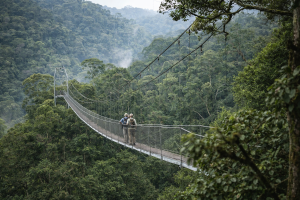
The plan included visits to Volcanoes National Park, Nyungwe National Park, Akagera National Park and relaxation at Lake Kivu.
Everything was ready. Excitement was high, then came the cancellation.
The traveler explained that concerns about Ebola in the region had changed their plans. In some workplaces and institutions abroad, traveling to regions associated with outbreaks can create restrictions or additional requirements when returning home.
Even when a country itself is safe, being geographically close to affected regions can still influence travel decisions.
For many people working in tourism, this reality is painful.
Behind every canceled trip is more than a missed vacation.
Some guides lose work, Drivers who miss income, Hotels with empty rooms, and communities that benefit from tourism support suddenly feel the impact.
In Rwanda, tourism supports thousands of livelihoods. From park rangers to local artisans, restaurant workers to community tourism projects, travel helps many families put food on the table.
When fear slows travel, the effects are deeply human.
Rwanda’s Serious Measures to Prevent Ebola
One thing Rwanda has consistently shown is preparedness.
Despite sharing proximity with the eastern Democratic Republic of the Congo and Uganda, Rwanda has invested heavily in prevention and border safety whenever Ebola concerns arise.
Health screening systems, monitoring procedures, public awareness efforts, and emergency preparedness have become an important part of Rwanda’s response whenever regional health risks emerge.
Authorities have repeatedly emphasized prevention, rapid response, and public safety.
Travelers entering Rwanda continue to benefit from a country that takes health protection seriously.
For those concerned about safety, it is important to stay informed using trusted government and health sources rather than fear-driven rumors online.
Is It Still Safe to Travel to Rwanda?
This is the question many people are asking.
The honest answer is that travelers should always stay informed and follow official travel guidance.
At the same time, Rwanda continues to operate responsibly with tourism activities, conservation experiences, conferences, and hospitality services while maintaining strong health awareness systems.
Visitors still come to experience gorilla trekking, wildlife safaris, cultural encounters, and breathtaking landscapes.
The beauty of Rwanda has not disappeared.
The people remain welcoming.
The experiences remain meaningful.
And importantly, Rwanda continues to prioritize safety.
Travel With Awareness, Not Fear
Fear is powerful.
Sometimes stronger than facts.
But responsible travel is not about panic. It is about awareness.
Before canceling plans, travelers should seek updated information, understand the realities on the ground, and make informed decisions based on trusted sources.
As someone who works in tourism and shares honest travel insights through Safaris & Truth, I believe travelers deserve balanced information.
Not fear.
Not misinformation.
Just truth.
Rwanda continues to stand resilient, careful, and prepared.
For those who choose to visit responsibly, incredible experiences still await.
From the mountain gorillas to the forests of Nyungwe and the wildlife plains of Akagera, Rwanda remains a destination filled with beauty, hospitality, and hope.
Closing….
Tourism is more than movement.
It is a connection.
And during uncertain times, honest information matters more than ever.
Yes, Ebola concerns in Rwanda are affecting travel confidence and impacting tourism businesses.
But Rwanda’s story is also one of preparation, resilience, and responsibility.
The conversation should not only be about fear.
It should also be about facts, compassion, and informed choices.
Written by Enock Musabyimana, Founder of Safaris & Truth, tourism professional, freelance guide, and one of the senior safari guides working part-time with Huza Gateway, one of the best premium tour companies in Rwanda, Uganda, Kenya, Tanzania, and Zanzibar.